What is the Bible? (podcast)
This is a recording of the sermon I preached at Cremona Country Fellowship in Cremona, Alberta, Canada. If you’re wondering what exactly the Bible is, in a nutshell, have a listen. 🙂
[display_podcast]

This is a recording of the sermon I preached at Cremona Country Fellowship in Cremona, Alberta, Canada. If you’re wondering what exactly the Bible is, in a nutshell, have a listen. 🙂
[display_podcast]
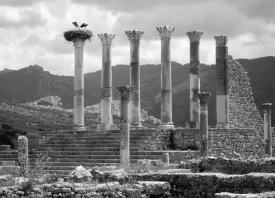
Every once in a while, it comes back. This whole idea that the story of Jesus was actually a conglomeration of pagan beliefs from the time.
 |
You know, this-or-that religion had a belief in a god that rose from the dead, so that was incorporated into Christianity. This-or-that religion had a belief that their god was virgin-born, so that was added into the Christmas story.
Christians have answered these claims, but – speaking of rising from the dead – these ideas pop up again with a new generation which hasn’t heard of (or doesn’t care to hear) the Christian response.
As you may guess, I feel these claims are pretty unconvincing. But just in case you’ve heard such things, or you’ve gotten into a discussion about such things, I thought I’d point you to a debate that was done in 2009 between Christian apologist (Alpha and Omega Ministries) Dr James White, and Dan Barker, atheist from the Freedom from Religion Foundation.
Sometimes things are a little clearer when you can hear two sides of the story. So if this is something you’ve been hearing about, spend a few dollars (I think it’s US$4) and download this debate on MP3.
Here it is – James White vs Dan Barker… Jesus: Myth or Messiah
Yesterday we started to attack this old myth that the "God of the Old Testament" is perpetually grumpy and angry, and that Jesus in the New Testament is all love and compassion.
We read a few sample verses about the love, compassion, kindness, and faithfulness of God in the OT.
Now we’re going in the opposite direction – is there any wrath in the NT? Yes – in fact, it could be argued that the wrath in the OT pales next to this…
(Again, remember that these all have a context of their own. The point is not that there is no love in the NT – even in the passages below – but that there is love and wrath in both the OT and NT.)
The Son of Man will send his angels, and they will gather out of his kingdom all causes of sin and all law-breakers, and throw them into the fiery furnace. In that place there will be weeping and gnashing of teeth. (Matthew 13:41-42)
Woe to you, scribes and Pharisees, hypocrites! …you witness against yourselves that you are sons of those who murdered the prophets. Fill up, then, the measure of your fathers. You serpents, you brood of vipers, how are you to escape being sentenced to hell? (Matthew 23:29-33)
But if that wicked servant says to himself, ‘My master is delayed,’ and begins to beat his fellow servants and eats and drinks with drunkards, the master of that servant will come on a day when he does not expect him and at an hour he does not know and will cut him in pieces and put him with the hypocrites. In that place there will be weeping and gnashing of teeth. (Matthew 24:48-51)
There were some present at that very time who told him about the Galileans whose blood Pilate had mingled with their sacrifices. And he answered them, "Do you think that these Galileans were worse sinners than all the other Galileans, because they suffered in this way? No, I tell you; but unless you repent, you will all likewise perish." (Luke 13:1-3)
‘I tell you that to everyone who has, more will be given, but from the one who has not, even what he has will be taken away. But as for these enemies of mine, who did not want me to reign over them, bring them here and slaughter them before me.’ (Luke 19:26-27)
Whoever believes in him is not condemned, but whoever does not believe is condemned already, because he has not believed in the name of the only Son of God. (John 3:18)
(So far, these are all the words of Jesus Himself. Often He used parables to explain God’s dealings with people, and many of the above quotes come from His parables.)
For the wrath of God is revealed from heaven against all ungodliness and unrighteousness of men, who by their unrighteousness suppress the truth. (Romans 1:18)
For you yourselves are fully aware that the day of the Lord will come like a thief in the night. While people are saying, "There is peace and security," then sudden destruction will come upon them as labor pains come upon a pregnant woman, and they will not escape. (1Thessalonians 5:2-3)
God considers it just to repay with affliction those who afflict you … when the Lord Jesus is revealed from heaven with his mighty angels in flaming fire, inflicting vengeance on those who do not know God and on those who do not obey the gospel of our Lord Jesus. They will suffer the punishment of eternal destruction, away from the presence of the Lord and from the glory of his might… (2Thessalonians 1:5-9)
It is a fearful thing to fall into the hands of the living God. (Hebrews 10:31)
But by the same word the heavens and earth that now exist are stored up for fire, being kept until the day of judgment and destruction of the ungodly. (2Peter 3:7)
Then the kings of the earth and the great ones and the generals and the rich and the powerful, and everyone, slave and free, hid themselves in the caves and among the rocks of the mountains, calling to the mountains and rocks, "Fall on us and hide us from the face of him who is seated on the throne, and from the wrath of the Lamb, for the great day of their wrath has come, and who can stand?" (Revelation 6:15-17)
And another angel, a third, followed them, saying with a loud voice, "If anyone worships the beast and its image and receives a mark on his forehead or on his hand, he also will drink the wine of God’s wrath, poured full strength into the cup of his anger, and he will be tormented with fire and sulfur in the presence of the holy angels and in the presence of the Lamb. And the smoke of their torment goes up forever and ever, and they have no rest, day or night, these worshipers of the beast and its image, and whoever receives the mark of its name." (Revelation 14:9-11)
Then I heard a loud voice from the temple telling the seven angels, "Go and pour out on the earth the seven bowls of the wrath of God." So the first angel went and poured out his bowl on the earth, and harmful and painful sores came upon the people who bore the mark of the beast and worshiped its image. (Revelation 16:1-2)
Then I saw heaven opened, and behold, a white horse! The one sitting on it is called Faithful and True, and in righteousness he judges and makes war … He is clothed in a robe dipped in blood, and the name by which he is called is The Word of God … From his mouth comes a sharp sword with which to strike down the nations, and he will rule them with a rod of iron. He will tread the winepress of the fury of the wrath of God the Almighty. (Revelation 19:11-15)
Notice, by the way, that many of these passages are either quotes from Jesus, or they’re talking about Jesus.
Now, we can discuss what these passages mean and how they fit into the rest of Scripture. And you might like it, or you might not. But please, can we set aside this silly notion that the OT is all anger and wrath, and the NT is all love and compassion? God’s attributes are complex and interwoven throughout Scripture.
And He’s the same God that He always has been, whatever we may think.
All right, time for a little Bible study. Sometimes I get tired of this worn-out idea that the "God of the Old Testament" is mean and wrathful, and the "Jesus of the New Testament" is warm, fuzzy, and loving.
Is there wrath in the OT? Of course. Love in the NT? For sure. But, surprise surprise, the same God is God of both.
Is there change in the New Testament? Well, God revealed Himself in the Messiah between the OT and NT – that means lots of new thoughts. But the New Testament writers would be a little surprised to hear about the "evolution" in God’s nature that some people claim.
So let’s take a look in the Old Testament and see if there’s any love of God in there. Tomorrow we’ll look in the New Testament to see if there’s anything besides warm fuzzies…
(Note: these verses all have a context of their own – often including wrath. The point is not that there is no wrath in the OT, but that love and wrath are together in the OT and NT.)
Know therefore that the LORD your God is God, the faithful God who keeps covenant and steadfast love with those who love him and keep his commandments, to a thousand generations… (Deuteronomy 7:9)
Be strong and courageous. Do not be frightened, and do not be dismayed, for the LORD your God is with you wherever you go. (Joshua 1:9)
…and Naomi said to her daughter-in-law, "May he be blessed by the LORD, whose kindness has not forsaken the living or the dead!" (Ruth 2:20)
…but you are a God ready to forgive, gracious and merciful, slow to anger and abounding in steadfast love, and did not forsake them. (Nehemiah 9:17)
But I have trusted in your steadfast love; my heart shall rejoice in your salvation. I will sing to the LORD, because he has dealt bountifully with me. (Psalm 13:5-6)
(God’s "steadfast love" is a common theme in the OT, especially in the Psalms, as you’ll see in the following examples. It’s often combined with the theme of His great works or faithfulness.)
For the word of the LORD is upright, and all his work is done in faithfulness. He loves righteousness and justice; the earth is full of the steadfast love of the LORD. (Psalm 33:4-5)
Your steadfast love, O LORD, extends to the heavens, your faithfulness to the clouds… How precious is your steadfast love, O God! The children of mankind take refuge in the shadow of your wings. (Psalm 36:5-7)
Gladden the soul of your servant, for to you, O Lord, do I lift up my soul. For you, O Lord, are good and forgiving, abounding in steadfast love to all who call upon you. (Psalm 86:4-5)
He who dwells in the shelter of the Most High will abide in the shadow of the Almighty … He will cover you with his pinions, and under his wings you will find refuge; his faithfulness is a shield and buckler. You will not fear the terror of the night, nor the arrow that flies by day, nor the pestilence that stalks in darkness, nor the destruction that wastes at noonday. (Psalm 91:1-6)
When I thought, "My foot slips," your steadfast love, O LORD, held me up. When the cares of my heart are many, your consolations cheer my soul. (Psalm 94:18-19)
Sing for joy, O heavens, and exult, O earth; break forth, O mountains, into singing! For the LORD has comforted his people and will have compassion on his afflicted … "Can a woman forget her nursing child, that she should have no compassion on the son of her womb? Even these may forget, yet I will not forget you. Behold, I have engraved you on the palms of my hands; your walls are continually before me." (Isaiah 49:13-16)
"For the mountains may depart and the hills be removed, but my steadfast love shall not depart from you, and my covenant of peace shall not be removed," says the LORD, who has compassion on you. (Isaiah 54:10)
I will recount the steadfast love of the LORD, the praises of the LORD, according to all that the LORD has granted us, and the great goodness to the house of Israel that he has granted them according to his compassion, according to the abundance of his steadfast love … And he became their Savior. (Isaiah 63:7-8)
The steadfast love of the LORD never ceases; his mercies never come to an end; they are new every morning; great is your faithfulness. (Lamentations 3:22-23)
For thus says the Lord GOD: …As a shepherd seeks out his flock when he is among his sheep that have been scattered, so will I seek out my sheep, and I will rescue them from all places where they have been scattered on a day of clouds and thick darkness. …I myself will be the shepherd of my sheep, and I myself will make them lie down, declares the Lord GOD. I will seek the lost, and I will bring back the strayed, and I will bind up the injured… (Ezekiel 34:11-16)
I led them with cords of kindness, with the bands of love, and I became to them as one who eases the yoke on their jaws, and I bent down to them and fed them. (Hosea 11:4)
Who is a God like you, pardoning iniquity and passing over transgression for the remnant of his inheritance? He does not retain his anger forever, because he delights in steadfast love. He will again have compassion on us; he will tread our iniquities underfoot. You will cast all our sins into the depths of the sea. (Micah 7:18-19)
The LORD your God is in your midst, a mighty one who will save; he will rejoice over you with gladness; he will quiet you by his love; he will exult over you with loud singing. (Zephaniah 3:17)
The Old Testament writers obviously thought of God as a God of love. In fact, as you see here, some of the familiar themes of love in the NT are actually from the OT! For example, seeking the lost, and being a Good Shepherd.
And these are only a few examples.
Tomorrow we’ll look at the other side of the coin.
Blessing and
glory and
wisdom and
thanksgiving and
honour and
power and
might
be to our
GOD
forever
and ever!
Amen!
¤ Revelation 7:12 ¤
After Easter weekend I shared part of a poem by John Bunyan (Prison Meditations). I’m still reading Fearless Pilgrim, a new biography of Bunyan, and wanted to share another quote from him about suffering.
 |
He knew a lot about suffering, by the way, spending many of the prime years of his life in jail away from his young family. This is from his book Seasonable Counsel: or, Advice To Sufferers., written in 1684 (the same year he wrote the second part of The Pilgrim’s Progress). The English has been modernized somewhat.
Your own doubts and mistrusts about what he will do, and about where you will go, when you for him have suffered awhile, he can resolve, yes, dissolve, crush, and bring to nothing.—He can make fear flee far away: and place heavenly confidence in its room. He can bring invisible and eternal things to the eye of your soul, and make you see that in those things in which your enemies shall see nothing, that you will count worth the loss of ten thousand lives to enjoy. … Yes, he can himself come near and bring his heaven and glory to you. The Spirit of glory and of God rests upon them that are but reproached for the name of Christ (1 Peter 4:14)…
Those that honour God, he will honour, yes, will put some of his glory upon them, but they shall be honoured. There is none can tell what God can do. He can make those things that in themselves are most fearful and terrible to behold, the most pleasant, delightful, and desirable things. He can make a jail more beautiful than a palace; restraint, more sweet by far than liberty. And "the reproach of Christ greater riches than the treasures in Egypt" (Heb 11:26). It is said of Christ, That "for the joy that was set before him, he endured the cross, despising the shame" (Heb 12:2).
You can read the whole book at Seasonable Counsel: or, Advice To Sufferers.