Ten years ago today, Nathanael finished building a castle.
No, really. In fact, he even moulded all the bricks himself!
This was a very cool castle from a kit. I’m not sure they’re still making it, but I can see there are currently some on eBay. Recommended, if you can find one. But it does take time, because each brick has to be moulded and dried before you can start building.
It seems like we’re making slow progress on the topic of justice (part of our Biblical Anthropology series), but these issues are certainly important. So far we’ve looked at justice from three perspectives – truth, the imago dei (image of God), and the law. But let’s continue with #4 – salvation.
#4 – Salvation
What do I mean by “salvation”? Forgiveness of sin through our Lord Jesus. Freedom from those burdens of the past, so that we can live for the Lord with joy.
You will not find final forgiveness anywhere else.
Now, remember, the world is building on the foundations that God has given us, but their building a house of truth mixed with lies. And so you often hear these kinds of phrases from the world:
Love your neighbour
Social justice
equality and equity
security
helping the most vulnerable
rights
And when Christians hear these things, at least the majority of them, they say “Amen!”. These are Christian concepts. From the Bible.
But here’s the problem. Each one of these words and concepts is redefined by the world. And so when you don’t agree with the world, they shoot at you from their ruined headquarters. “You don’t love your neighbour!” “You’re against equality and equity!” But the world defines what these things mean, rejecting God’s own definitions.
Salvation, according to the world, must come through activism. And very often we look to a government to “save” us. Or we tear down a government and create a new one, a new “messiah”. Oops – that didn’t work. Let’s tear it down again.
And according to many, there is only salvation in continual redistribution and continual lamentation/repentance, – on and on it must go, because we can only find complete forgiveness and salvation in the finished work of Christ. Any other source must be continual works and never any peace.
#5 – Earthly Authorities
The world longs for justice. And we have the answer. We know how to apply justice, because we have God’s Word. And as Christians, we know that someday God will bring perfect justice.
But if you reject God, you need perfect justice now.
Let’s look at it this way. Do you remember the law about witnesses in the Bible?
A single witness shall not suffice against a person for any crime or for any wrong in connection with any offense that he has committed. Only on the evidence of two witnesses or of three witnesses shall a charge be established.
Deuteronomy 19:15
Think about this for a moment. Are there always 2-3 witnesses to every crime? Of course not. And so, if the government obeys God’s law, some criminals will escape.
“It’s not fair!” Fine, but we know that all will be judged by God, the perfect Judge with perfect justice.
So what is God doing, giving us this law? Why even bother with justice in this life?
God is giving us partial justice and order in the world, while protecting the innocent.
If there is reasonable doubt – we don’t condemn!
But the world wants complete justice – now. Now, because the world has rejected God. And so the end justifies the means. And so we shame people on social media, if someone seems guilty to us. And so we create so-called “hate laws”, because we believe that we must judge how people think (as if we know). We must judge the motivations of the heart.
Without the final justice of God, we ourselves must find a way to judge hearts and minds, not just actions.
The world must find a way to perfectly understand history, and correct all the injustices of all times – and correct them now.
But no one can take God’s place. There are – there must be – limits to earthly justice.
The Bible warns us:
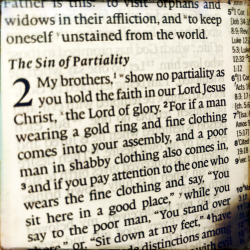
You shall do no injustice in court. You shall not be partial to the poor or defer to the great, but in righteousness shall you judge your neighbor.
Leviticus 19:15
But the world says no – the government must take (steal) from the rich, and give to the poor, because everyone must be equal in every way. And yes, the government can steal using taxes. And yes, stealing from the rich is still stealing.
“You shall not be partial to the poor or defer to the great…”
We know that earthly justice has its limits. But we also know that God will bring perfect justice.
It is wrong for a rich person to steal. It is wrong for a poor person to steal. How do we know? We have God’s law.
But God also tells us to defend the oppressed, and we’ll talk about that more later. The law must apply to everyone, but injustice tends to attack certain people, right? The “vulnerable”, orphans, and so on. And so we do have work to do to especially protect certain people. Why? In order to make sure that the law is being equally applied to all, because in many cases it is not.
Recently I had reason to learn a little more about the legal system in Canada, a system that still retains many Christian values (in spite of its many problems). A lot of things in Canada’s legal system are set up so that everyone can have access – even the person who is not well-spoken, even the person without connections, even the person without resources. Why? Because the law should apply equally to all, and should favour neither rich or poor.
Two more “perspectives on justice” to go! See you next time.
Getting back home to Mexico, and getting back into ministry, can sometimes be a challenge. Not that there’s anything particularly wrong, mind you. And we’re glad to be here!
Flowers in front of our house
Part of it is simply that (1) there were a few things we were planning to do over the summer here that we didn’t do, because we went to Canada, and (2) we’re still dealing with some things from our trip, on top of regular ministry.
But also, there’s quite simply a lot going on and a lot that needs to be done! 🙂
In a few minutes I’ll be going over to help set up for the institute class, which our church is hosting this week. The Church History course is continuing, this week the topic being “The Era of Liberalism, Progress, and Missions”. A few light topics, including Marxism, slavery, liberalism, missions movements and religious sects to finish off our week.
We’ve been enjoying a study of the Tabernacle as we continue our journey through the book of Exodus. I’ll be speaking tomorrow about the court and the altar.
Yesterday was Independence Day, so we had a bit of a focus on that last week, and we will again this week from what I understand. Last week I led the music and we sang quite a few Mexican worship songs.
Other activities are continuing – the men’s and women’s Bible studies, and youth group tonight. A kids’ class started up again while we were gone. So we’re looking at how things might change and adapt in the weeks ahead.
We’re so thankful for the men and women who are serving the Lord here with us. We appreciate so many of you who are praying. It’s completely cliché to say that these are challenging times, but indeed they are.
But as we continue our study of the Tabernacle, I’m reminded that when God gives the work, He also provides for the work. And somehow He gives it an eternal value. Praise the Lord!
Ten years ago today, in the community of Jesús María, we were having a big Independence Day celebration! There were all kinds of activities and carnival-type games. Even a contest to see who could eat the most hot peppers (“Who is most ‘Mexican'”?).
Here’s one of the pictures from the day – two lovely Mexican ladies… Cathy Fry and Hannah Cottrill!
We’re still on our third perspective on the topic of justice – law. We’ve already seen certain problems with the way that the world wants to apply law.
For example, who decides who is guilty (or “oppressed”). Well, the “experts”, of course! And the experts often seem to assign guilt not only based on their opinion of your actions, but also based on the group you’re a part of.
Now, as Christians, when we hear a question like, “Who is guilty?”, our minds race to verses like Romans 3:23 or Isaiah 53:6. Everyone is guilty, right?
Well, yes of course. God says, if you’ve broken My law, you’re a sinner – you’re guilty. It doesn’t matter what socioeconomic or racial group you may be a part of.
But wait – doesn’t the Bible talk about the sin of families? For example, in Exodus 34:7, God describes Himself as “visiting the iniquity of the fathers on the children and the children’s children, to the third and the fourth generation.” Yes, but be careful. Here we’re talking about children who are continuing in the sins of their fathers.
Deuteronomy 5:9-10 clarifies things a bit: “I the Lord your God am a jealous God, visiting the iniquity of the fathers on the children to the third and fourth generation of those who hate me, but showing steadfast love to thousands of those who love me and keep my commandments.”
In other words, if the children continue in their hatred of God, they go on accumulating more and more judgement.
But these are brief statements. God explains more carefully in another text – Ezekiel 18. So let’s go there to see what God says about sin, especially sin in families.
The word of the LORD came to me: “What do you mean by repeating this proverb concerning the land of Israel, ‘The fathers have eaten sour grapes, and the children’s teeth are set on edge’?
Ezekiel 18:1-2
You know how your teeth feel when you eat sour grapes, right? You might be making a “sour face” right now! This proverb says, our ancestors at sour grapes, but it’s our teeth that are feeling funny! That’s kinda weird.
In other words, the Israelites were blaming God for judging them for the sins of their ancestors. It’s not fair!
So how does God respond?
As I live, declares the Lord GOD, this proverb shall no more be used by you in Israel. Behold, all souls are mine; the soul of the father as well as the soul of the son is mine: the soul who sins shall die.
Ezekiel 18:3-4
Could you please clarify what you mean, God?
If a man is righteous and does what is just and right— if he does not eat upon the mountains or lift up his eyes to the idols of the house of Israel, does not defile his neighbor’s wife or approach a woman in her time of menstrual impurity, does not oppress anyone, but restores to the debtor his pledge, commits no robbery, gives his bread to the hungry and covers the naked with a garment, does not lend at interest or take any profit, withholds his hand from injustice, executes true justice between man and man, walks in my statutes, and keeps my rules by acting faithfully—he is righteous; he shall surely live, declares the Lord GOD.
Ezekiel 18:5-9
So this is a just man, a good man according to the Law of Moses. An individual who is just before the law, due to his own actions.
But this man had a son…
If he fathers a son who is violent, a shedder of blood, who does any of these things (though he himself did none of these things), who even eats upon the mountains, defiles his neighbor’s wife, oppresses the poor and needy, commits robbery, does not restore the pledge, lifts up his eyes to the idols, commits abomination, lends at interest, and takes profit; shall he then live? He shall not live. He has done all these abominations; he shall surely die; his blood shall be upon himself.
Ezekiel 18:10-13
You come from a Christian family? Cool. If you sin apart from Christ, you’re punished. Your family will never save you.
So now we have a wicked son of a just father. Now let’s see what happens if the wicked son has a son of his own…
Now suppose this man fathers a son who sees all the sins that his father has done; he sees, and does not do likewise: he does not eat upon the mountains or lift up his eyes to the idols of the house of Israel, does not defile his neighbor’s wife, does not oppress anyone, exacts no pledge, commits no robbery, but gives his bread to the hungry and covers the naked with a garment, withholds his hand from iniquity, takes no interest or profit, obeys my rules, and walks in my statutes; he shall not die for his father’s iniquity; he shall surely live.
Ezekiel 18:14-17
So let’s summarize:
The soul who sins shall die. The son shall not suffer for the iniquity of the father, nor the father suffer for the iniquity of the son. The righteousness of the righteous shall be upon himself, and the wickedness of the wicked shall be upon himself.
Ezekiel 18:20
Now, this is pretty black and white. Sin comes from the individual. The evil of another person is not a punishment for you to bear, verse 20.
But wait – what happens if that evil man repents?
But if a wicked person turns away from all his sins that he has committed and keeps all my statutes and does what is just and right, he shall surely live; he shall not die. None of the transgressions that he has committed shall be remembered against him; for the righteousness that he has done he shall live. Have I any pleasure in the death of the wicked, declares the Lord God, and not rather that he should turn from his way and live?
Ezekiel 18:21-23
Remember, we are in the Old Testament here. Now we know the background – God saves us through Christ. But in the OT, even though people didn’t know all about the cross quite yet, they did know that God is merciful. He wants to forgive. If the wicked person repents, God will forgive.
But what if the opposite happens?
But when a righteous person turns away from his righteousness and does injustice and does the same abominations that the wicked person does, shall he live? None of the righteous deeds that he has done shall be remembered; for the treachery of which he is guilty and the sin he has committed, for them he shall die.
Ezekiel 18:24
This doesn’t mean that you can lose your salvation. You can’t. What it does mean is that if someone decides to do evil, they will be punished – even if they have lived a good and moral life up until that point.
So if you want to know if you’re pleasing to God, here’s the question to ask. How am I living today? And of course, that includes whether or not you’ve repented of your past sins, and if you’re willing to make things right. We’ll talk more about that later.
Yet the house of Israel says, ‘The way of the Lord is not just.’ O house of Israel, are my ways not just? Is it not your ways that are not just?
Ezekiel 18:29
People love to judge God, and call Him unjust. But what does God do? What are His actions? He doesn’t punish the innocent for the sins of their ancestors. He only punishes those who are personally wicked. And if the wicked repents? God is merciful – He forgives. But humans think they have found a better way.
So let’s make it clear how God’s Law works.
Justice >> Life —— Evil >> Death Repentence >> Forgiveness
Do we experience earthly consequences from the sins of our parents? Yes. But God will actively fight against us if we continue in those sins, and will show us faithfulness, mercy, and love if we leave them behind. “. . . the soul who sins shall die”. The just will live.
And remember this: It’s God, our Creator, who tells us what is a sin, and who is a sinner. We are responsible for our own sin. Don’t blame your parents or your grandparents. You’re free from the sins of whatever supposed group you’re a part of – as long as you’re not a participant in their sin. As long as you’re living for the Lord.
We can (and should) remember the sins of our ancestors, and learn from them. We should also remember the brave sacrifices that our ancestors have made, that we benefit from. And listen – this is important – sometimes both of those are found in the same person!
But what is most important for me? How I’m living today.
Well, we’ve spent a long time talking about the perspective of law. We have four more perspectives on justice to go – see you next time!